Internet of Things: Big Data Bezos
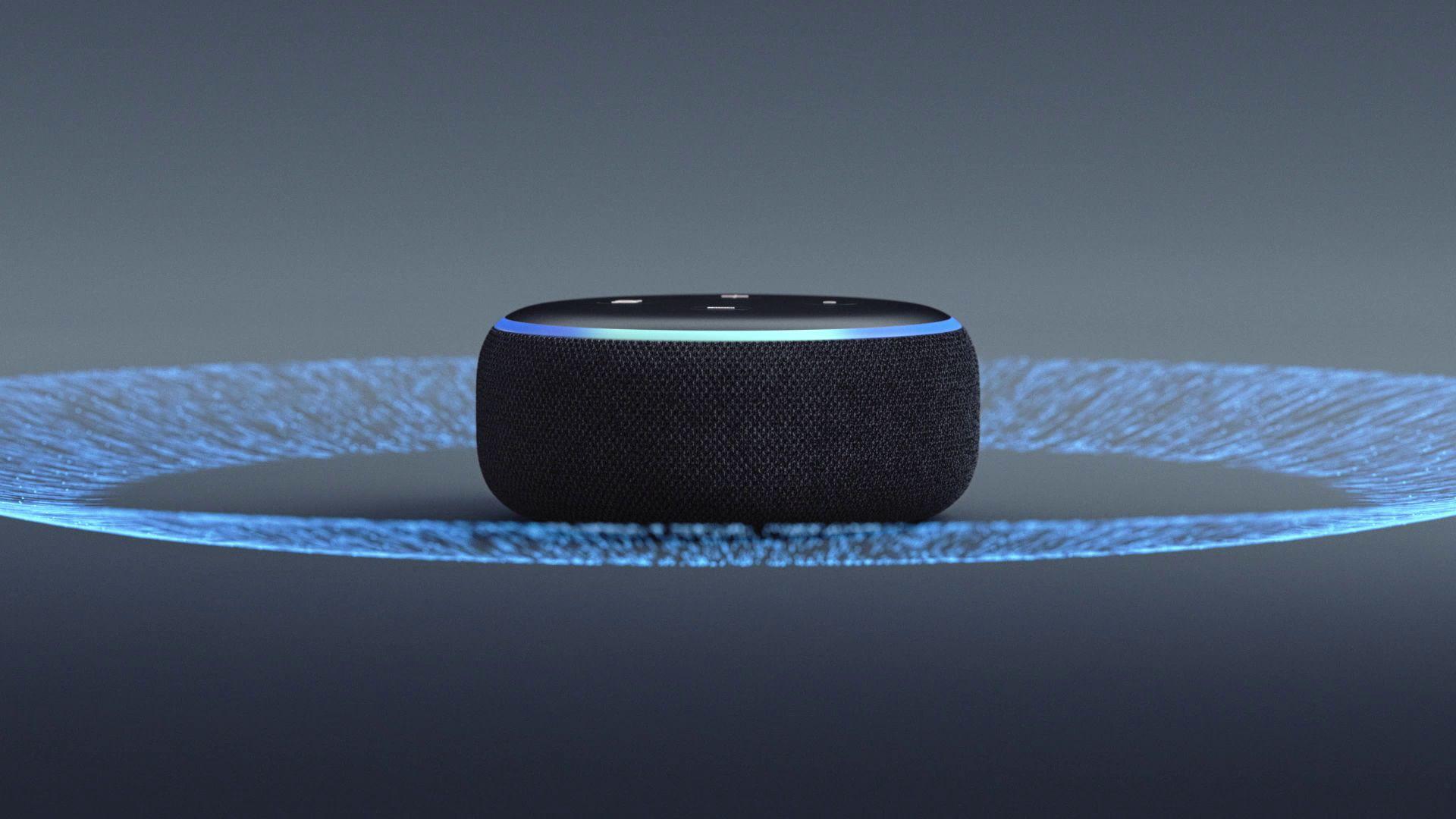
Hey Alexa, can you please write this blog post for me? Most people are aware of, if not own a smart device in their homes to assist them with very simple tasks, such as playing music, checking the weather and finding out how much traffic there is going to be on their commute. As consumers, when we buy an Amazon Alexa this is the product we are buying, but to Amazon we are the product. The global e-commerce behemoth has significantly grown in the past few years and its success can be attributed to many factors including their involvement in the Internet of Things and their processing of Big Data.
The Internet of Things or 'IoT' for short, is a term that refers to the billions of physical devices around the world that are now connected to the internet, all collecting and sharing data. This is thanks to the cost of manufacturing sensor chips being cheaper of time. With millions of consumers now being able to access and purchase IoT products its become easier and easier for companies to access consumer data through these IoT products.

An example of a company who has used big data to further exceed in sales is Amazon. What started as a small company selling books and excelled into a worldwide online retail behemoth selling everything from notepads to computers. Aside from selling a plethora of products from other companies, in November of 2014 Amazon launched the worlds first AI assistant device, the Amazon Alexa. It pioneered the smart speaker industry and since the Alexa's launch the entire industry has exploded. What at the time seemed like a 'surprising new speaker that talks to you' has now become a very normal device to be found in 2020 homes all over the world.
While the Alexa assists consumers with daily tasks using voice commands, it also assists Amazon by using the data it collects from voice interactions to build algorithms to better market products towards its customers. The Alexa continuously has its microphones on awaiting for its "wake-word" a trigger which then transmits the audio data recorded and sends it to amazons cloud for processing. As Alexa owners continue to enter voice commands into the cloud, the algorithm for that given consumer continues to grow and strengthen allowing amazon to better market desirable products to its consumers.

While many deem this form of data collection and processing to be dangerous and an invasion of privacy, I for one would far rather have my data collected and analysed to that the products and advertisements marketed towards me are what I am interested in and what I desire. However, I am still a firm believer that there is a fine line between this data being collected ethically to benefit consumers and this data being used with poor intent to exploit consumers. Whilst the days of AI devices being used to collect consumer data is in its early fruition, there have been instances where the exact amount of data being collected by the Alexa have been tested.

In 2015 there was a case in the United States where a man had friends over to his house and the following morning one of them was found dead in the hot tub. The host owned an Alexa and the police filed search warrants to access the data the Alexa had recorded in a hope to uncover evidence to find out what had happened. It had been reported that Amazon had refused to give the police access to their servers due to privacy laws, however the suspect agreed to hand over the Alexa data. The police department had stated that they were unable to extract the data from the device and they did not contest it.
Owners of each individual Alexa device however can find, browse and delete every conversation their device has ever recorded. This is a highly beneficial service that Amazon offers as it provides transparency into exactly how much data Amazon records. Personally I find comfort in the fact Amazon did not disclose any information to the police in the 2015 case without the owners permission, as it upholds privacy laws at the data we provide.

Do you enjoy your smart devices and think the data it collects is beneficial? Or do you think we're headed down a one way street? Let me know in the comments!


great post, i was writing the same topic and it quite interesting that if you know how to delete your audio recording it would be fine
ReplyDeleteHi Tim, My original comment didn't post correctly. A very interesting topic indeed and a very good feature to be able to delete your audio logs!
DeleteInteresting read Louis ! I think in some cases the data that some social media platform collect is very beneficial for us. However, its always the question of what data have they collected that they shouldnt know about they know. That part worries me. Because, why do you have that data, and if you do what are you going to use it for
ReplyDeleteHI There I agree. There needs to be regulation in to how much data and the times and queues for collecting data is collected. Any data that may be used for political agendas needs to not be done!
DeleteCool post Louis, I personally don't own an Alexa or Google Nest so I don't have much experience with them, but I can definitely see the positives and negatives to these devices! Many people deem it as an invasion of privacy but don't realise that their phone is constantly listening to them! I didn't know about the story of Alexa providing evidence in a police case which is actually really interesting and could be helpful for many future incidents! I do enjoy my smart devices (such as my iPhone) and don't know what I'd do without it. I think people just need to do their research and be cautious with their settings.
ReplyDelete- Zali
Hi Zali! Yes I agree people are quick to judge smart devices but don't realise their mobile phones collect the same level if not more data as it is on you at all times! Further more Alexa devices will only use your data for Amazon services and Google will only use your data for Google and linked services!
DeleteVery interesting post Louis! I have a google mini next to my bed that connects to my lamp. Reading this post really make me ponder on the potential of these devices. I am more inclined to look at the positve use cases, however, I understand how privacy can be a red flag.
ReplyDeleteHi there, there is a huge potential for these devices to make everyday life more efficient and easier. There are some privacy concerns but as long as their adequately regulated we should have no problem!
DeleteGreat post Louis. I used to not like the concept of AI however I think there is a huge market for it in the future. Do you actually own an AI device? If so, what does it assist you with the most?
ReplyDeleteHi there, AI is they way forward and there constantly more positives being discovered through its evolution. However I believe there is a limit and anything exceeding that could be dangerous. My AI device has custom commands that do various things and certain phrases for certain people ;)
Delete